

Table of Contents
- How Aloe Vera Works on Skin: Hydration, Repair, and Protection
- Aloe Vera for Acne-Prone Skin: Managing Breakouts and Redness
- How to Use Aloe Vera Gel on Face: A Step-by-Step Guide
- Aloe Vera Side Effects on Skin: What to Watch For
- Aloe Vera for Razor Burn, Sunburn, and Post-Workout Recovery
- Aloe Vera for Hair and Scalp: Beyond Skin Care
- Frequently Asked Questions
Last Updated: September 26, 2026
How Aloe Vera Works on Skin: Hydration, Repair, and Protection
The benefits of aloe vera for skin start with its gel, roughly 99% water yet dense with vitamins, minerals, and polysaccharides that make it far more than a simple moisturizer. This guide from AT Ease Hair and Skin Care covers what it does, who benefits most, and how to use it without irritation.
The gel works through three overlapping mechanisms. It acts as a humectant, pulling water into the outer skin layer and slowing transepidermal water loss. Its mucilage and polysaccharides form a lightweight film that supports barrier repair without the heaviness of an oil-based emollient. And its compounds are anti-inflammatory, calming erythema and pruritus after sun exposure or shaving.
Aloe vera is a succulent whose leaf gel is used dermatologically for hydration, wound healing, and sunburn relief. It contains vitamins A, C, and E plus bioactive compounds that support collagen synthesis and elasticity.
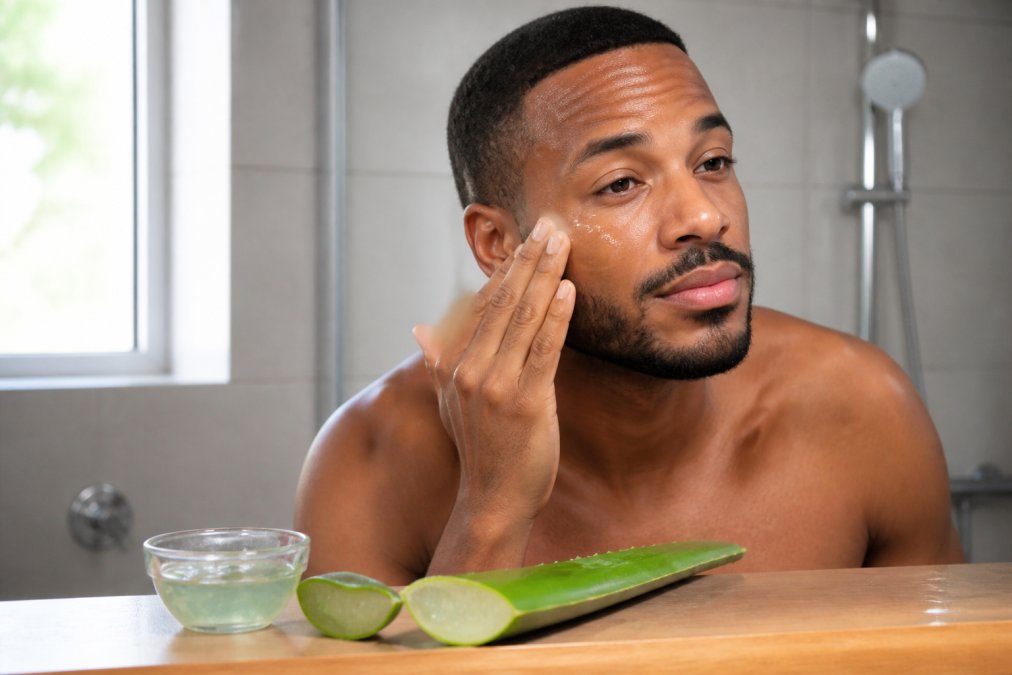
The Science Behind Aloe Vera's Skin Benefits
What separates aloe from a basic moisturizer is hydration plus antioxidants in one ingredient. The polysaccharides hold water at the surface, while vitamins C and E defend against the oxidative stress that drives fine lines and hyper-pigmentation. Being water-based, it absorbs quickly and rarely leaves residue.
One honest limitation: aloe is a humectant, not an occlusive. In dry, cold conditions it needs a heavier product on top to lock moisture in, or it can draw moisture away from skin drier than the air.
Aloe Vera for Acne-Prone Skin: Managing Breakouts and Redness
Aloe vera for acne-prone skin earns its place because it soothes inflammation without clogging pores. It is low on the comedogenic scale, so it is unlikely to block follicles, and its anti-inflammatory action reduces redness after a breakout heals. How you use it matters more than that you use it.
What Aloe Actually Does (and Doesn't Do) for Acne
Aloe is not an acne treatment and will not clear active acne the way a dedicated active does. It calms the skin around blemishes and reduces irritation from over-scrubbing or harsh products, support, not the main event.
Dermatologists often describe a two-phase approach: use a proven active for the acne itself, then aloe to manage the inflammation and barrier disruption that active causes.
Skin Type Specific Protocols
A one-size-fits-all routine is why many people give up on aloe. Here is how to adapt it.
Oily, acne-prone skin: Apply a thin layer of pure aloe gel after cleansing and before a lightweight, non-comedogenic moisturizer. In humid climates aloe alone may suffice. Avoid heavy creams, which trap oil and worsen congestion.
Combination skin: Use aloe on oily zones (T-zone, chin) and a richer moisturizer on dry zones (cheeks, jaw), so dry areas do not tighten while oily areas get lightweight hydration.
Dry, acne-prone skin: Aloe alone is not enough. Apply to damp skin, then seal immediately with a ceramide or squalane-based moisturizer, or the humectant pulls moisture from already-dry skin.
Sensitive, reactive skin: Dilute pure aloe gel with distilled water at roughly 1:1 for two weeks, then move to full strength if tolerated. Patch test on the inner forearm for 24 hours first.
Ingredient Compatibility: What NOT to Mix with Aloe
This is the part most guides leave out, and it causes the most irritation.
Retinoids (tretinoin, adapalene, retinol): Do not apply aloe and a retinoid together. Retinoids already disrupt the barrier, and layering a humectant on top can increase penetration, causing more peeling and redness. Use aloe in the morning and the retinoid at night, or alternate nights.
Exfoliating acids (glycolic, lactic, salicylic): Wait at least 20 to 30 minutes after an acid before applying aloe, or you drive the acid deeper and amplify stinging. If skin is already irritated, skip aloe and use a plain ceramide moisturizer.
Benzoyl peroxide: Aloe calms the dryness benzoyl peroxide causes, but do not mix them in the same layer. Apply benzoyl peroxide first, let it dry completely, then apply aloe separately.
Vitamin C (L-ascorbic acid): Both are acidic and can sting when layered. Apply the vitamin C serum first, wait for it to absorb, then apply aloe. If stinging occurs, separate them into morning and evening routines.
A Simple Acne-Support Routine
Morning: Gentle cleanser → vitamin C serum (if using) → aloe vera gel (thin layer) → lightweight moisturizer → SPF.
How to Use Aloe Vera Gel on Face: A Step-by-Step Guide
Learning how to use aloe vera gel on face correctly takes about two minutes and prevents most irritation. The method matters as much as the product, and so does the form of aloe you choose.
Total time: 5 minutes Difficulty: Beginner
What you'll need:
- Pure aloe vera gel (or gel expressed from a fresh leaf)
- Gentle cleanser
- Clean hands or a spatula
- Moisturizer for layering (optional)
Raw Plant Gel vs. Commercial Aloe Products: What the Science Says
Most guides say "use pure aloe" without explaining what that means in practice. Raw and commercial aloe behave very differently on skin, affecting both efficacy and safety.
How to Read an Aloe Vera Label
A few practical rules cut through most marketing claims:
- Aloe should be the first ingredient if the product is marketed as an aloe gel. If water or alcohol is first, the aloe content is low.
- "Aloe vera leaf juice" or "aloe vera gel" are the forms you want. "Aloe vera extract" is a concentrated form that may be diluted heavily.
- Avoid added alcohol, fragrance, and essential oils if you have sensitive or acne-prone skin. These are common irritants that get blamed on aloe itself.
- Check the preservative system. A product with no preservatives and a long shelf life is a red flag. A product with no preservatives and a short shelf life (refrigerate after opening) is likely closer to raw gel.
- Color matters. Pure aloe gel is clear to slightly cloudy. A bright green gel is almost certainly colored with dye.
Storage and Contamination
If you use raw gel, store it in a clean glass jar in the refrigerator and use it within 48 hours, scooping with a clean spoon or spatula, not your fingers. Discard it if it changes color, smells sour, or develops a film.
Aloe Vera Side Effects on Skin: What to Watch For
Aloe vera side effects on skin are uncommon but real. The most frequent reaction is contact irritation from the yellow latex, not the clear gel, with itching, redness, and burning shortly after application.
Aloe Vera for Razor Burn, Sunburn, and Post-Workout Recovery
For razor burn and sunburn, aloe vera is one of the most reliable soothing agents available. Its cooling, anti-inflammatory action calms heat and tightness after a close shave or too much sun while supporting barrier repair.
Aloe Vera for Hair and Scalp: Beyond Skin Care
Aloe vera's benefits extend past the face. On the scalp, the gel soothes irritation and supports a balanced environment for hair follicles, which is why it appears in so many scalp treatments and conditioners.
| Concern | How Aloe Helps | Best Application |
|---|---|---|
| Razor burn | Calms inflammation, supports barrier repair | Apply within minutes of shaving |
| Acne redness | Soothes, low comedogenic risk | Thin layer after cleansing |
| Sunburn | Cools, reduces erythema | Generous layer, reapply as needed |
| Dry scalp | Eases itch, balances scalp | Diluted rinse between washes |
| Post-workout chafing | Cools hot, stressed skin | Light layer on affected areas |
Frequently Asked Questions
Can I apply aloe vera on my face daily?
Yes, applying pure aloe vera gel daily is generally safe for most skin types. It provides lightweight hydration without clogging pores, making it suitable for acne-prone skin. For best results, apply after cleansing and before moisturizer. If you have sensitive skin, start with once every other day to see how your skin responds.
What should I avoid mixing with aloe vera?
Avoid mixing aloe vera with strong exfoliating acids like glycolic or salicylic acid, as this can over-irritate the skin. Also, don't combine it with retinoids unless advised by a dermatologist, since both can increase sensitivity. Stick to gentle ingredients like hyaluronic acid or niacinamide for a soothing blend.
What are the disadvantages of aloe vera gel for skin?
Aloe vera side effects on skin are rare but can include redness, itching, or a burning sensation if you're allergic. Some people may experience contact dermatitis. Always do a patch test on your inner arm before applying to your face. Also, avoid ingesting aloe vera gel, as it can cause digestive issues.
How does aloe vera help with skin hydration and anti-aging?
Aloe vera is a natural humectant, meaning it draws moisture into the skin. It also contains vitamins C and E, which are antioxidants that help protect against free radical damage. This can improve skin elasticity and reduce the appearance of fine lines over time. For anti-aging, use it consistently as part of your daily routine.


